
Submit when the Science is Done
Learn how to make agentic AI trustworthy in clinical trials, with your experts in control, always.

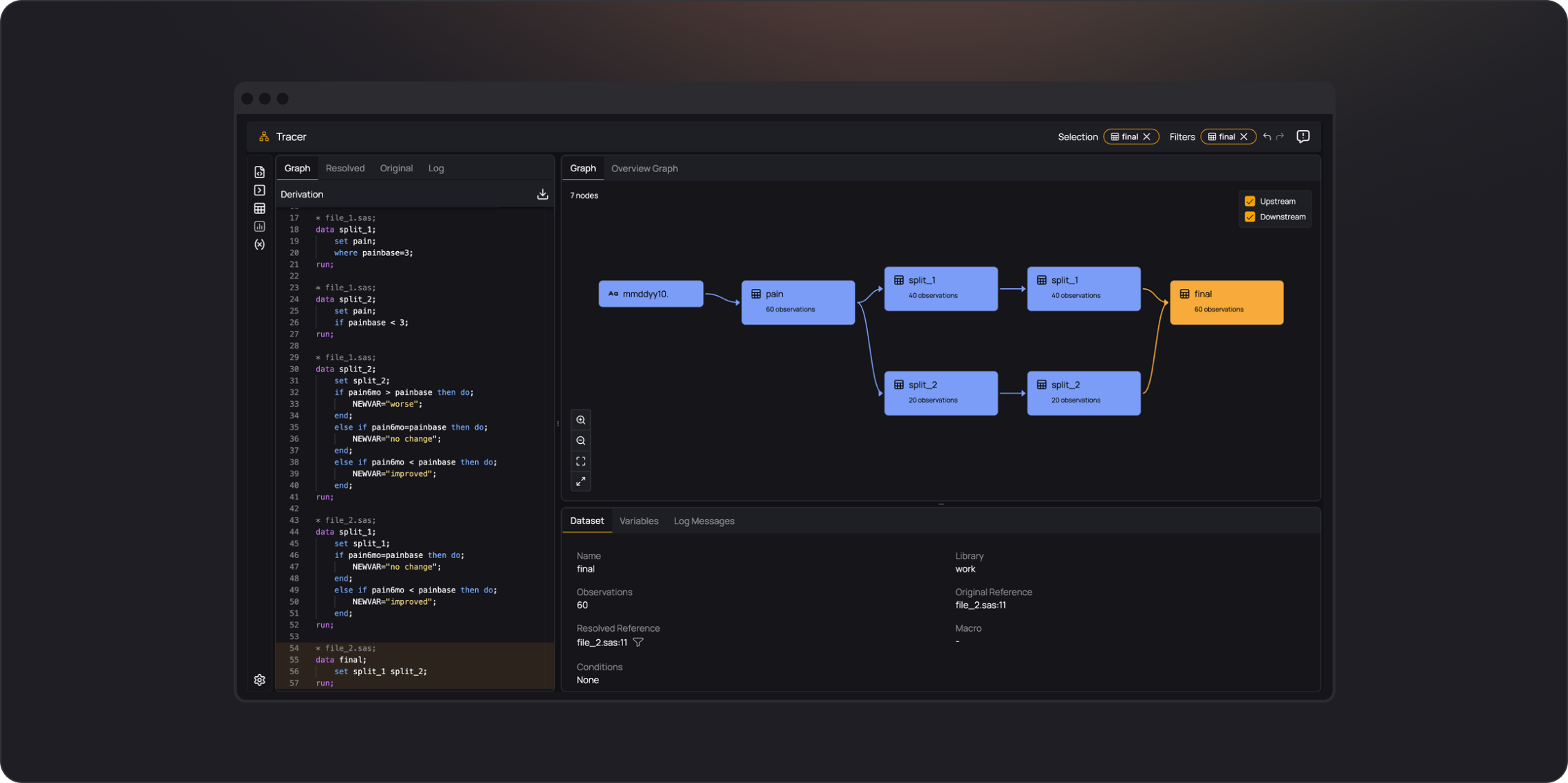
The basis of Verisian's code traceability is rooted in a concept called dataset traceability. This type of traceability captures every dataset imported, created, and exported during the execution of your programs. All datasets and their relationships are displayed in a dependency graph that extends across all files in your analysis. Our tools let you seamlessly navigate all the way from TLFs, through ADaM, SDTM to raw data inputs, clearly displaying upstream dependencies and downstream effects, resulting in a complete, navigable and transparent data lineage (Figure 1).
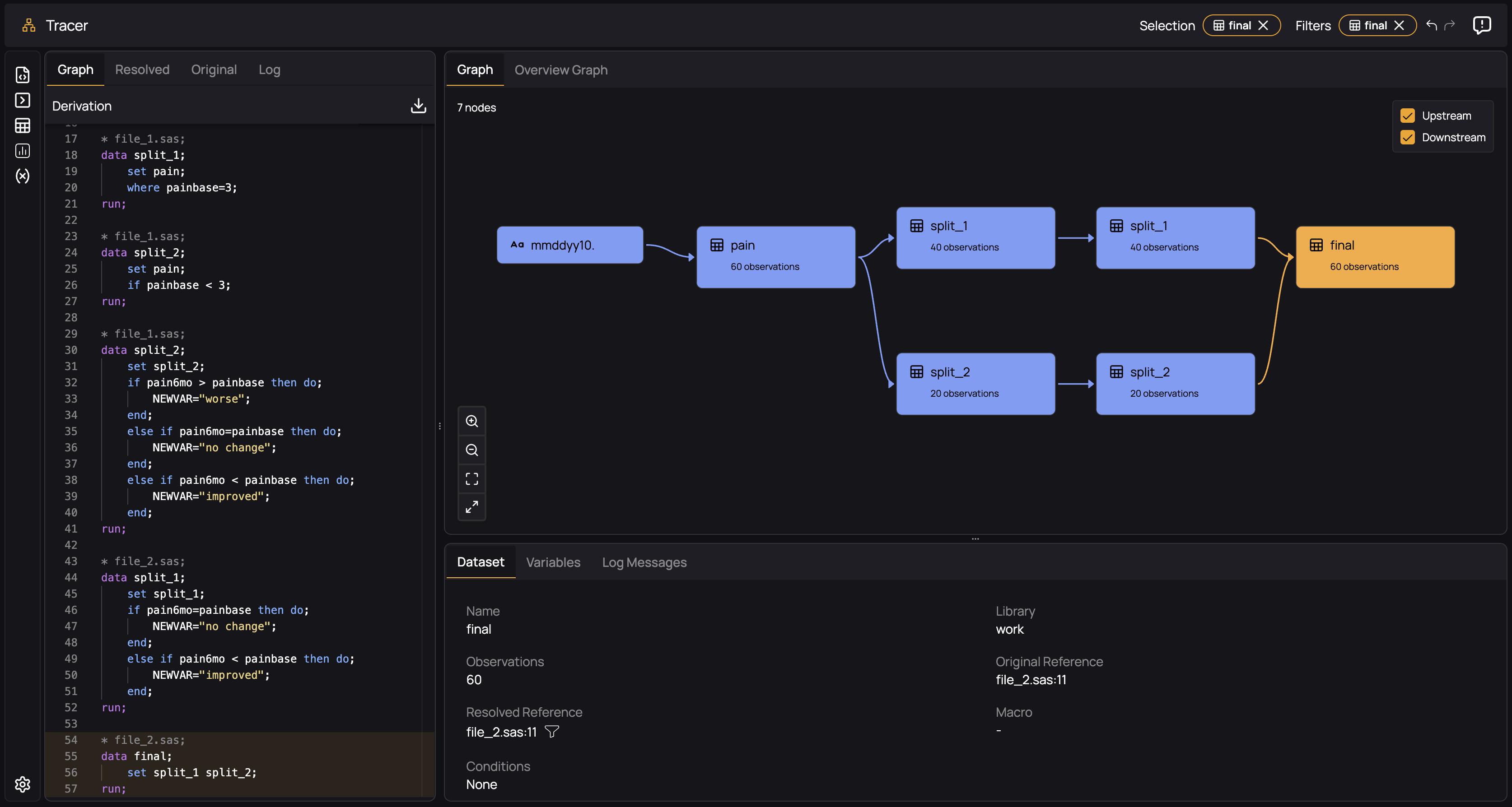
In the example below (from our demo study), manually tracing a result to its source requires a programmer to go through eight different files. With dataset traceability, we can now automatically create a virtual file containing just the 1,010 lines of code required to create the dataset of interest, providing instantly the complete data lineage of any dataset in your analysis (Figure 2).
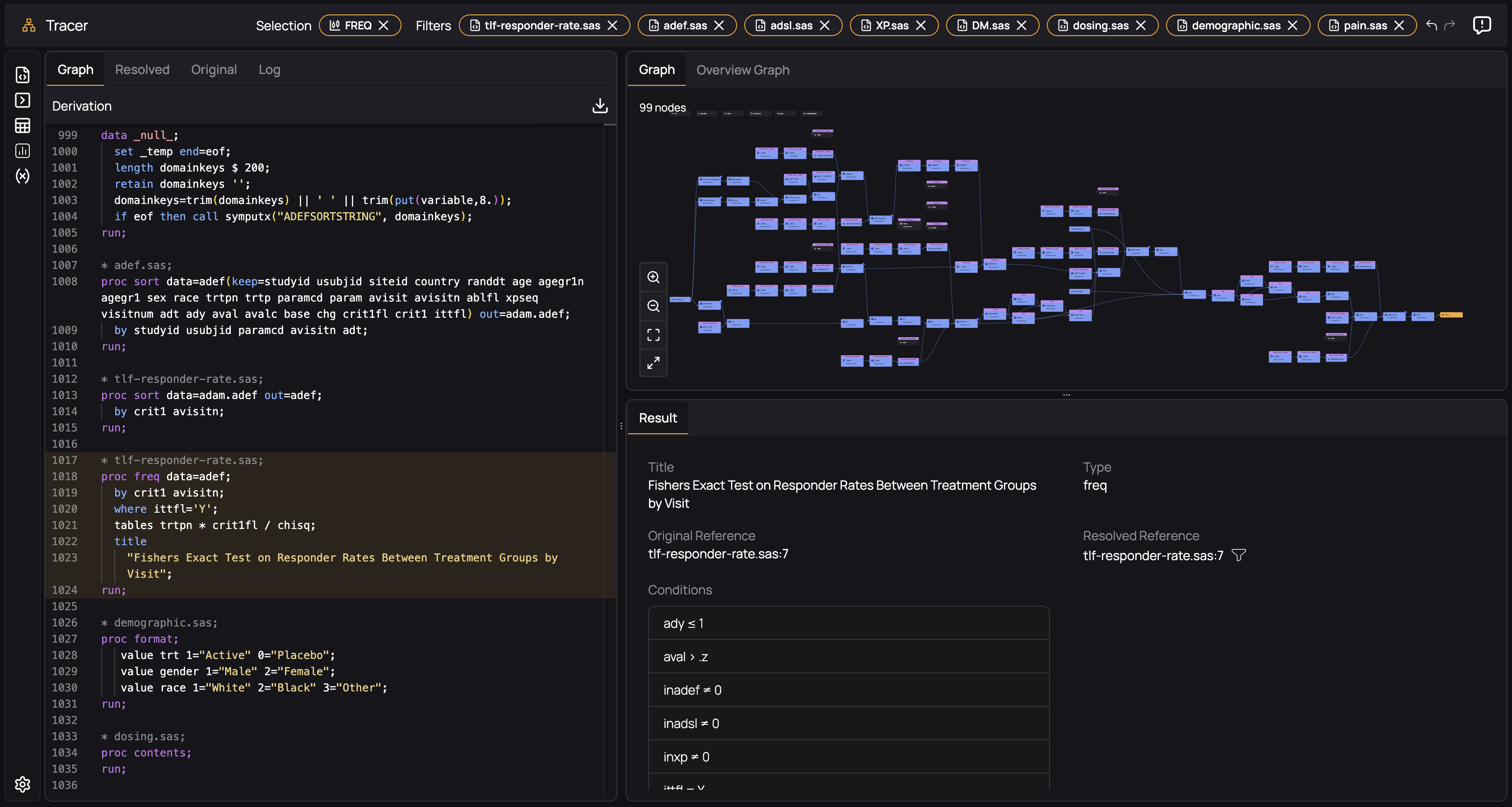
Besides dataset traceability, Verisian also provides value and variable traceability. To learn more about this, and how we combine traceability with AI to help statistical programmers, have a look at some of our other articles:

See Verisian in action. Share a few details and we’ll be in touch to schedule your demo.

Your request has been received. A member of the Verisian team will contact you shortly to arrange a demo.