Submit when the Science is Done
Learn how to make agentic AI trustworthy in clinical trials, with your experts in control, always.

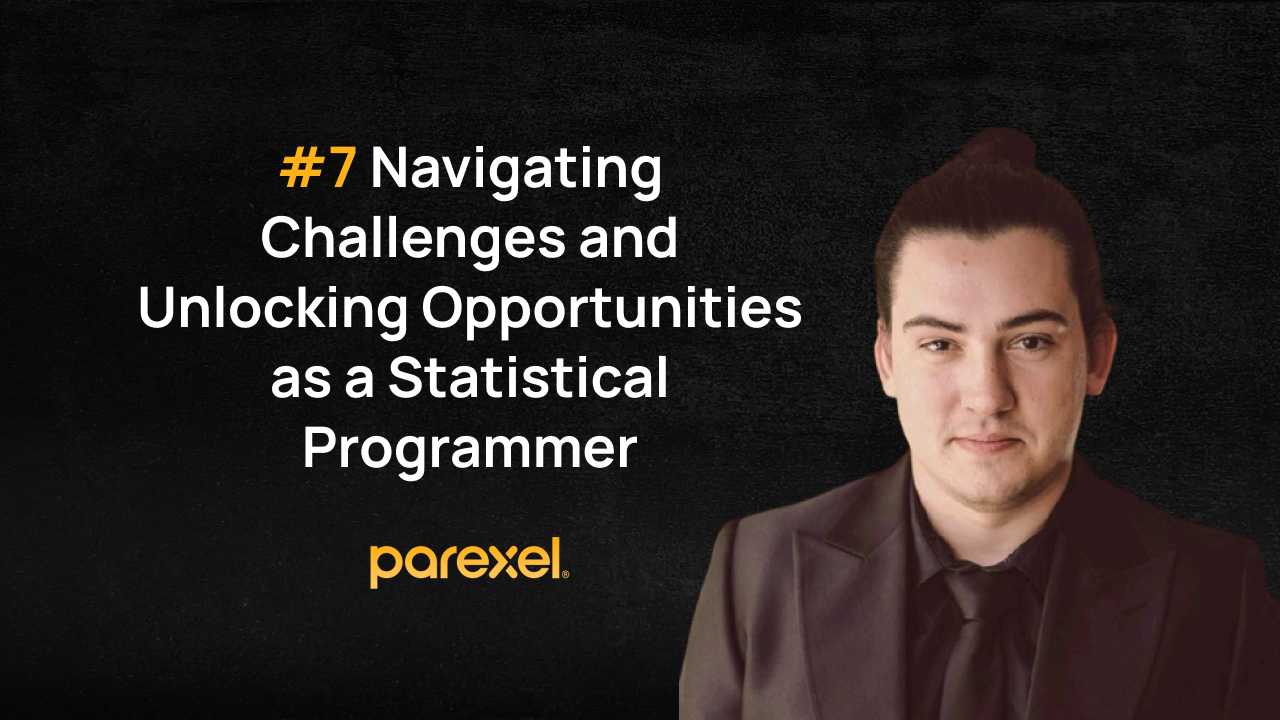
In this episode of the Verisian Community Podcast, we welcome Daniel Rolo, Director of Statistical Programming at Parexel to discuss the evolving landscape of statistical programming. Daniel addresses the shift from traditional tools like SAS to modern languages such as Python and R, emphasizing the response to increasing data complexity and the rise of open-source platforms and AI. He outlines the challenges programmers face when adapting to these new tools and provides strategies for effective learning and professional growth. The conversation also covers the importance of staying updated with changing clinical data standards and how to leverage new skill sets for career advancement. Daniel's insights offer a deep dive into the dynamic field of statistical programming, highlighting opportunities for innovation and industry advancement.
Guest: Daniel Rolo, director of statistical programming at Parexel, over 10 years in the CRO space; background in computer science and software engineering before transitioning into statistical programming.
Host: Tomás Sabat Stöfsel, CEO & Co-Founder, Verisian
Topics: Daniel's path from computer science into CRO-based statistical programming leadership, the mindset shift from individual contributor to organizational strategist, defining the "golden age" of clinical programming, choosing between SAS, R, and Python as a career skill investment, embracing discomfort and dedicating time to upskilling, personal branding and career growth strategies, predictions for AI-driven validation and the evolving role of the statistical programmer
The full episode can be found on YouTube, Apple Podcasts or Spotify.
Daniel's background is in computer science and software engineering rather than statistics, meaning he had to learn what SAS even was upon entering the industry over a decade ago. His career has spanned operational delivery roles (submissions, analysis, ad hoc work), leadership and management, and now innovation-and-strategy work at Parexel, where he evaluates emerging technologies and industry trends for potential integration into the company's processes. He describes his career interest as a deliberate blend of technology, process, and people, arguing all three need to work in harmony for an organization to function well.
Asked what mindset shift is needed moving from individual contributor to organizational-level thinking, Daniel points to transferable skills as the single biggest lever for career advancement, specifically effective communication both upward and downward, and staying genuinely curious about what adjacent functions (medical writers, data management) are doing rather than staying narrowly focused on one's own deliverables. He frames breaking down functional silos and building end-to-end awareness of how the "biopharmaceutical machine" fits together as what ultimately separates programmers who advance into broader roles from those who stay purely specialized.
Asked to unpack his "golden age" framing, Daniel attributes it to several converging factors rather than any single driver: the post-ChatGPT mainstreaming of prompt-based AI, which pulled in people who previously saw AI as pure science fiction; a data-source shift from EDC toward real-time wearable and sensor-driven patient data (which he notes remains unevenly distributed globally but is trending that direction); and a generational and cultural shift in how new programmers prepare for the field, with strong candidates increasingly building self-taught, portfolio-based skill sets rather than relying solely on traditional degree pathways. He connects this to a broader industry mandate (citing ICH requirements) toward continuous, holistic data review rather than static, milestone-based deliverables, arguing the clinical programmer's role is shifting conceptually toward something closer to a data scientist or data steward.
Asked how both junior and veteran programmers should think about SAS versus R versus Python, Daniel resists picking a side, arguing all three are simply different syntaxes for the same underlying algorithmic and statistical foundations, and that genuine command of those foundations (algorithms, data structures, statistical models) matters more than which specific language a programmer learned first. He compares this to being multilingual in spoken languages: added fluency is a genuine professional edge, never a disadvantage, and encourages veteran SAS users specifically not to fear open-source tools, noting a concept presented differently in another language can sometimes clarify something that felt obscure in a familiar one.
Daniel's practical advice for continuous learning is concrete: block dedicated calendar time for research and upskilling (he cites two hours a week, which compounds to roughly 100 hours a year, enough to meaningfully shift career direction, though not reach expert level), because without a scheduled block, day-to-day demands will consistently crowd it out. He frames growing comfort with a task, doing procedures or macros "almost second nature without much thought", as itself a signal that it may be time to seek a new challenge, and encourages treating professional risk-taking as a volume game: making many small bids for new opportunities (speaking up in a meeting, pitching an idea, having a career conversation with a manager) produces more total wins than making few, even at an identical success rate, since most likely failure outcomes are mild (awkwardness) rather than serious.
Daniel recommends treating a resume and career trajectory like an ongoing brand rather than something updated only once every several years, and actively leveraging networking platforms like LinkedIn, industry communities, and conferences (virtual and in-person) to build visibility. Beyond external branding, he stresses direct transparency with one's own manager about career ambitions, arguing most managers are receptive when an employee frames a stated goal alongside a willingness to put in the work to get there, since it helps managers plan career pathways they might not otherwise think to offer. He extends the same "be brave" framing to sharing new ideas internally, even ones that risk being rejected, treating a shot-down proposal as a low-cost learning opportunity rather than a genuine failure.
Looking ahead, Daniel expects the next decade to look "radically different" from the last, with AI-based technologies and real-time data delivery as core pillars, citing a survey finding over 80% of a sample of 30+ organizations have at least one AI initiative in planning. He's explicit that this isn't about replacing programmers but "supercharging" their toolset while keeping a human in the loop. His most concrete prediction concerns validation: moving away from traditional human-driven checklist review and static hand-off between developer and validator, toward embedded copilots that support good programming practice as code is written, automated log and code review tooling, and validation executed continuously alongside development rather than as a separate end-stage process (an area he notes Verisian is directly working on). He expects these shifts to further redefine the statistical programmer's role toward broader, end-to-end data fluency.
"The next 10 years are gonna be radically different to the last 10 years. AI-based technologies, real-time data delivery are gonna be key cornerstones to our programming landscape." — Daniel Rolo
"It's a case of learning the different syntax and nuances of the different languages at the end of the day... being flexible enough to have a repertoire of tools available in your skillset." — Daniel Rolo
"If you are at a point where you're starting to do procedures or macros or anything like that almost second nature without much thought, I think it's time maybe to try something new and challenge yourself again." — Daniel Rolo
"Over 80% of those organizations have at least one or more AI-based initiatives that are in planning phase. So really, I think the train has left the station." — Daniel Rolo
"Failure is not failure, it's just an opportunity to improve at the end of the day. There's no such thing as failure in our industry." — Daniel Rolo
What does Daniel mean by the "golden age" of clinical programming?
A convergence of factors: mainstream AI adoption following ChatGPT, a shift from EDC toward real-time wearable and sensor-driven patient data, and a cultural shift toward self-taught, portfolio-based candidates entering the field alongside traditional degree paths.
Does Daniel recommend learning SAS, R, or Python specifically?
He avoids picking a side, arguing strong foundations in algorithms, data structures, and statistical concepts matter more than which specific language a programmer learns first, and encourages being multilingual across tools the same way speaking multiple human languages is a professional edge.
How does Daniel recommend programmers make time for continuous learning?
By blocking dedicated calendar time, even just two hours a week (roughly 100 hours a year), for research and upskilling, arguing that without a scheduled block, day-to-day work will consistently crowd it out.
How does Daniel expect AI to change code validation in clinical programming?
He predicts a shift away from traditional, human-driven checklist review and static developer-to-validator hand-offs, toward embedded coding copilots, automated log and code review tools, and validation integrated continuously into development rather than performed as a separate end-stage step.
What career advice does Daniel give for advancing within an organization?
Treat your resume and career like an ongoing brand, keep it current, network actively via LinkedIn and conferences, and be directly transparent with your manager about your ambitions, since managers are often an underused pathway to opportunities you might not otherwise access.
The Verisian Community Podcast brings together experts in clinical trials to exchange innovative ideas and best practices central to clinical reporting, submission and review. Aligned with Verisian's mission to accelerate the evaluation and market launch of new medical treatments, each episode features expert insights, with guests ranging from statistical programmers to medical writers, to discuss the challenges and opportunities of the latest software and technology.
You can listen to us on YouTube, Apple Podcasts or Spotify.

See Verisian in action. Share a few details and we’ll be in touch to schedule your demo.

Your request has been received. A member of the Verisian team will contact you shortly to arrange a demo.